 Opals
Opals
 Gemstones
 Jewelry
 Coins
Coins


Vous n'avez pas enchéri sur cette enchère.
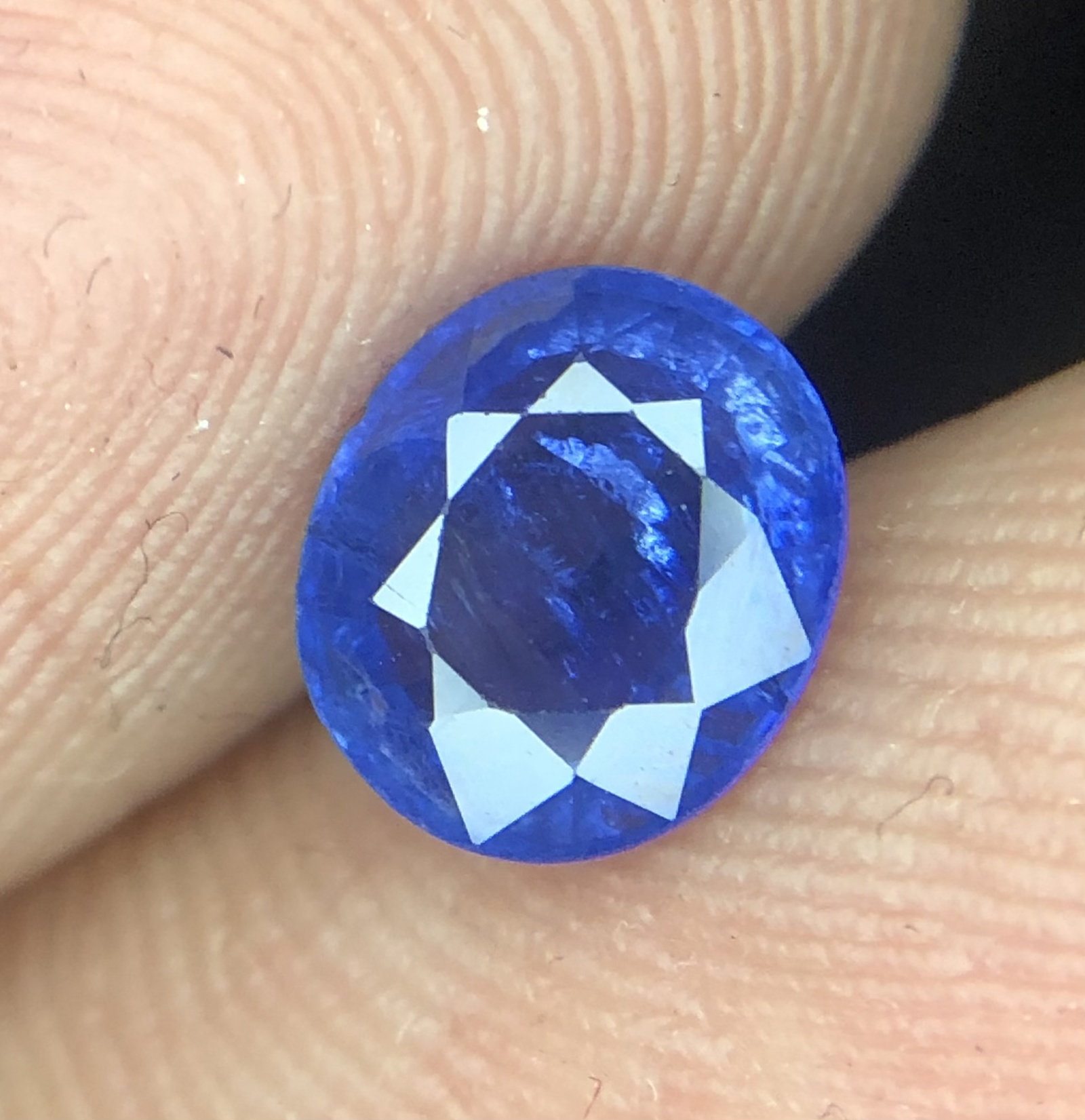
1.60 carat natural sapphire from srilanka
- UGS
- Dimensions (mm)
- 7.67 x 6.57 x 3.5mm
- Poids (cts)
- 1.6
- Shape
- Oval
- Type
- Faceted
- Couleurs
-
Sapphire Gemstone Description
Sapphire is a precious gemstone from the corundum mineral family, composed of aluminum oxide (Al₂O₃). While it is most famous for its deep blue color, sapphire occurs in a variety of other hues, except red (which is classified as ruby).
Key Characteristics of Sapphire
• Color:
• The most sought-after sapphire is deep blue.
• It also appears in pink, yellow, green, purple, orange, white, and even color-changing varieties.
• Padparadscha sapphire, a rare pink-orange variety, is one of the most valuable.
• Hardness: 9 on the Mohs scale (extremely durable, second only to diamond).
• Luster: Vitreous (glassy) and highly reflective.
• Clarity: High-quality sapphires are typically eye-clean, though some may have minor inclusions such as rutile silk.
• Refractive Index: 1.76 – 1.78, giving it exceptional brilliance.
• Formation: Found in igneous, metamorphic, and alluvial deposits.
• Sources:
• Myanmar (Burma) – Produces some of the finest blue sapphires.
• Sri Lanka – Known for high-quality blue and padparadscha sapphires.
• Kashmir (India) – Famous for velvety blue sapphires (extremely rare).
• Madagascar, Thailand, Australia, and Montana (USA) – Other key sapphire sources.
Special Types of Sapphire
• Padparadscha Sapphire: A rare pinkish-orange variety highly prized for its unique color.
• Star Sapphire: Displays a six-rayed star effect (asterism) due to aligned rutile inclusions.
• Color-Change Sapphire: Shifts between blue and purple depending on lighting conditions.
Treatment & Enhancements
• Heat Treatment: Commonly used to enhance color and clarity.
• Unheated Sapphires: Extremely rare and highly valuable.
• Beryllium Treatment: Used to create vibrant orange and yellow hues.
Uses & Value
• A top choice for fine jewelry, including rings, necklaces, and royal crowns.
• The birthstone for September and a traditional engagement ring choice (e.g., Princess Dianaâ€TMs sapphire ring).
• Symbolizes wisdom, loyalty, and protection.
Would you like a comparison between sapphire and another gemstone, such as spinel or tanzanite?
| Fournisseur d'expédition | Expédition vers Thaïlande | Expédition dans le reste du monde | Expédition combinée ( Thaïlande ) | Expédition combinée (reste du monde) |
|---|---|---|---|---|
| Standard Shipping - Tracked |
|
|
|
|
| FedEx |
|
|
|
|
- UGS
- Dimensions (mm)
- 7.67 x 6.57 x 3.5 mm
- Poids (cts)
- 1.6
- Shape
- Oval
- Type
- Faceted
- Couleurs
-
Sapphire Gemstone Description
Sapphire is a precious gemstone from the corundum mineral family, composed of aluminum oxide (Al₂O₃). While it is most famous for its deep blue color, sapphire occurs in a variety of other hues, except red (which is classified as ruby).
Key Characteristics of Sapphire
• Color:
• The most sought-after sapphire is deep blue.
• It also appears in pink, yellow, green, purple, orange, white, and even color-changing varieties.
• Padparadscha sapphire, a rare pink-orange variety, is one of the most valuable.
• Hardness: 9 on the Mohs scale (extremely durable, second only to diamond).
• Luster: Vitreous (glassy) and highly reflective.
• Clarity: High-quality sapphires are typically eye-clean, though some may have minor inclusions such as rutile silk.
• Refractive Index: 1.76 – 1.78, giving it exceptional brilliance.
• Formation: Found in igneous, metamorphic, and alluvial deposits.
• Sources:
• Myanmar (Burma) – Produces some of the finest blue sapphires.
• Sri Lanka – Known for high-quality blue and padparadscha sapphires.
• Kashmir (India) – Famous for velvety blue sapphires (extremely rare).
• Madagascar, Thailand, Australia, and Montana (USA) – Other key sapphire sources.
Special Types of Sapphire
• Padparadscha Sapphire: A rare pinkish-orange variety highly prized for its unique color.
• Star Sapphire: Displays a six-rayed star effect (asterism) due to aligned rutile inclusions.
• Color-Change Sapphire: Shifts between blue and purple depending on lighting conditions.
Treatment & Enhancements
• Heat Treatment: Commonly used to enhance color and clarity.
• Unheated Sapphires: Extremely rare and highly valuable.
• Beryllium Treatment: Used to create vibrant orange and yellow hues.
Uses & Value
• A top choice for fine jewelry, including rings, necklaces, and royal crowns.
• The birthstone for September and a traditional engagement ring choice (e.g., Princess Dianaâ€TMs sapphire ring).
• Symbolizes wisdom, loyalty, and protection.
Would you like a comparison between sapphire and another gemstone, such as spinel or tanzanite?
| Fournisseur d'expédition | Expédition vers Thaïlande | Expédition dans le reste du monde | Expédition combinée ( Thaïlande ) | Expédition combinée (reste du monde) |
|---|---|---|---|---|
| Standard Shipping - Tracked |
|
|
|
|
| FedEx |
|
|
|
|
Welcome to our online gemstone jewelry boutique, where elegance meets the natural beauty of the eart....
-
 Positif
Absolutely stunning

-
Positif
Nice stone, thank you


-
Positif
Small but beautiful color


Pourquoi les utilisateurs se surenchérissent-ils ?
Lorsqu'une enchère est placée, il s'agit du montant maximum qu'une personne est prête à enchérir pour le produit. Notre système enchérira alors automatiquement au nom de l'enchérisseur, augmentant progressivement l'enchère jusqu'au maximum pour maintenir sa position de meilleur enchérisseur.
Lorsqu'une icône indiquant « Enchère automatique » apparaît, cela signifie que notre système place activement des enchères pour l'enchérisseur en fonction de son enchère maximale. Cela peut donner l'impression que les enchérisseurs se surenchérissent, mais c'est simplement le résultat de la mise à jour de l'enchère par le système pour refléter la limite maximale des enchérisseurs.
